A slow line at the counter costs more than patience. In 2026, banks, hospitals, and retail chains across the Kingdom treat customer flow as a hard financial metric, and a modern queue management system in Saudi Arabia sits at the center of that conversation. When a branch trims its average wait from eleven minutes to four, staff handle more tickets, complaints drop, and satisfaction scores climb the next quarter.
This guide breaks down how smart queuing and drive-thru automation reshape service operations for Saudi enterprises. We will look at the technology, the measurable ROI, and a practical rollout plan, then answer the questions decision-makers actually ask before signing off on a deployment.
Why a queue management system in Saudi Arabia drives real ROI
Waiting is invisible on a balance sheet, yet it leaks money every day. A queue management system in Saudi Arabia converts that chaos into structured, measurable flow. Customers pull a ticket by phone or kiosk, receive an SMS position update, and reach the right counter without crowding the lobby.
The payoff is not only comfort. Managers gain a live dashboard showing peak hours, average service time per agent, and abandonment rates. With that data, a bank in Riyadh can staff Thursdays differently from Sundays instead of guessing.
Adoption is climbing across the Kingdom because the results are hard to argue with. Enterprises that install a queue management system in saudi arabia routinely report shorter waits, higher first-contact resolution, and cleaner compliance records within the first quarter. The technology also frees senior staff from crowd control so they focus on actual service.
Saudi Arabia’s own transformation agenda reinforces this shift. The government’s National Transformation Program under Vision 2030 pushes public and private services toward digital, citizen-friendly experiences, and orderly service delivery is a visible part of that goal.
What a modern queuing platform includes
- Self-service ticket kiosks and mobile QR ticketing to cut lobby crowding.
- Digital signage that calls the next number in Arabic and English.
- Real-time analytics on wait time, service time, and no-show rates.
- Appointment booking that blends walk-ins with scheduled visits.
- Multi-branch reporting so head office compares Riyadh, Jeddah, and Dammam side by side.
Where drive-thru and PAR systems change the game
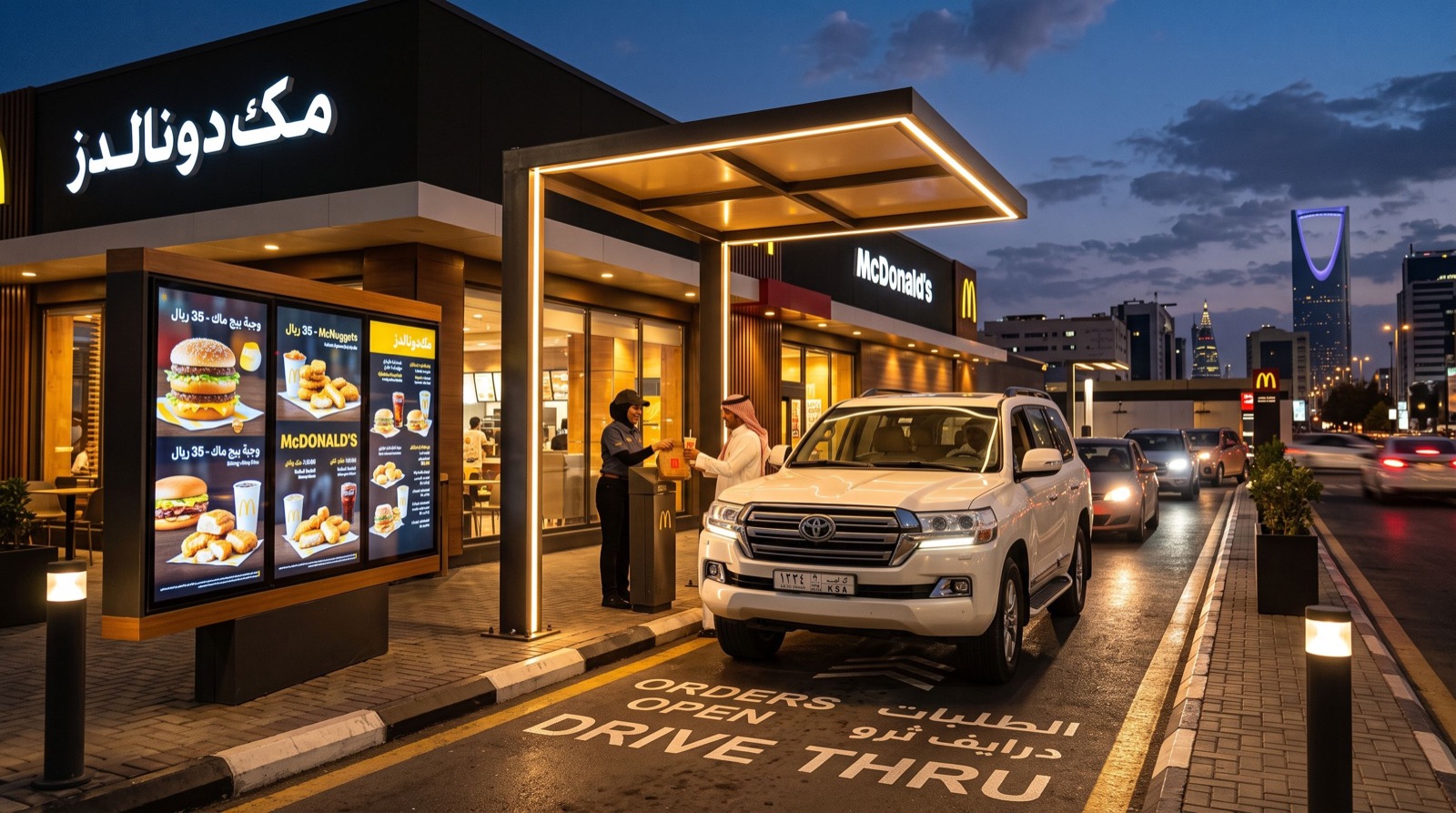
Quick-service restaurants and pharmacies live or die on drive-thru speed. Every extra ten seconds per car at the window compounds into lost throughput during the lunch rush. That is why operators pair lobby queuing with a purpose-built lane platform such as a PAR Drive Thru in Saudi Arabia deployment to keep vehicles moving.
A well-tuned drive-thru system tracks each car with sensors, times every stage from order point to handoff, and flashes alerts when a lane stalls. Managers finally see where the bottleneck really sits, whether at the order board, the payment window, or the pickup point.
Retail banks now borrow the same idea for drive-up ATMs and document collection. The principle is universal: measure the journey, remove the friction, and repeat.
How does a drive-thru system cut service time?
It cuts time by making delay visible and accountable. Vehicle-detection sensors start a timer the moment a car arrives, and the dashboard shows staff exactly which stage runs long. Because the data is live, a shift lead can add a second order-taker before a queue snowballs rather than after customers drive away.
Comparing lobby queuing and drive-thru automation
The two systems solve related problems in different environments. The table below helps operators decide where to invest first.
| Factor | Lobby Queue System | PAR Drive-Thru System |
|---|---|---|
| Primary setting | Banks, hospitals, telecom stores | QSR, pharmacy, drive-up banking |
| Core hardware | Kiosk, ticket printer, signage | Lane sensors, timers, headsets |
| Key metric | Average wait per ticket | Cars served per hour |
| Typical gain in 2026 | 30–50% shorter waits | 15–25% faster lane cycles |
| Customer signal | SMS position update | Live order-board timer |
A practical rollout plan for Saudi branches
Deployment succeeds when it follows a sequence rather than a scramble. Below is the order most Riyadh operators use to go live without disrupting daily trade.
- Audit current flow: log arrivals, waits, and drop-offs for two typical weeks.
- Set targets: define the wait time and throughput you actually want to hit.
- Pilot one branch: install kiosks and signage, then train front-line staff.
- Integrate data: connect the dashboard to your CRM or core banking system.
- Scale by region: replicate the tuned setup across the network branch by branch.
- Review monthly: use analytics to reforecast staffing every thirty days.
Choosing a partner matters as much as choosing hardware. Work with dependable specialists who can support Arabic-language interfaces, local warranties, and on-site training rather than a ship-and-forget vendor.
One insight most operators miss
Do not chase the shortest possible wait at any cost. A queue that feels fair beats a queue that is merely fast. When customers see a transparent ticket order and receive honest position updates, their perceived wait shrinks even before the actual number does. Design for fairness first, then optimize the clock.
Frequently Asked Questions
How much does a queue management system in Saudi Arabia cost?
Pricing depends on the number of counters, kiosks, and branches. A single-branch setup with one kiosk, signage, and analytics typically starts modestly, while multi-branch enterprise rollouts scale with hardware count and integration needs. Most Saudi buyers recover the cost within the first year through higher throughput and lower staffing waste.
Can the system run in Arabic and English?
Yes. Modern platforms display tickets, signage, and voice calls in both Arabic and English, which is essential for mixed customer bases in Riyadh and Jeddah. Bilingual interfaces also help expatriate staff and visitors follow the flow without confusion.
Does a PAR drive-thru system integrate with lobby queuing?
It can. Many 2026 deployments feed both lane data and lobby data into one dashboard, giving managers a single view of the whole customer journey. That unified reporting is exactly what regional head offices ask for when comparing branch performance.
How long does deployment take?
A single-branch pilot often goes live within a few weeks once hardware arrives and staff training is scheduled. Network-wide rollouts run in phases, usually branch by branch, so daily operations never fully stop during installation.
Conclusion
Customer flow is now a competitive advantage, not a back-office chore. A well-chosen queue management system in Saudi Arabia, paired with smart drive-thru automation, turns waiting into measurable, improvable data that lifts satisfaction and revenue at the same time. Start with one branch, prove the numbers, then scale with confidence in 2026. Reach out to a specialist team today and book a flow audit before your next peak season.