Residential vs Commercial Plots: Which Wins in 2026?
Every buyer walking into a sales office in Rawalpindi or Islamabad eventually asks the same question: should the money go into a residential vs commercial plot, or does one category simply make more sense for the current market? The honest answer depends on your timeline, your appetite for risk, and how closely you plan to manage the asset. This guide breaks down both paths plainly, using 2026 market conditions, so you can match the plot type to your actual goal instead of whichever one the agent happens to be pushing that week.
The Twin Cities Property Market in 2026
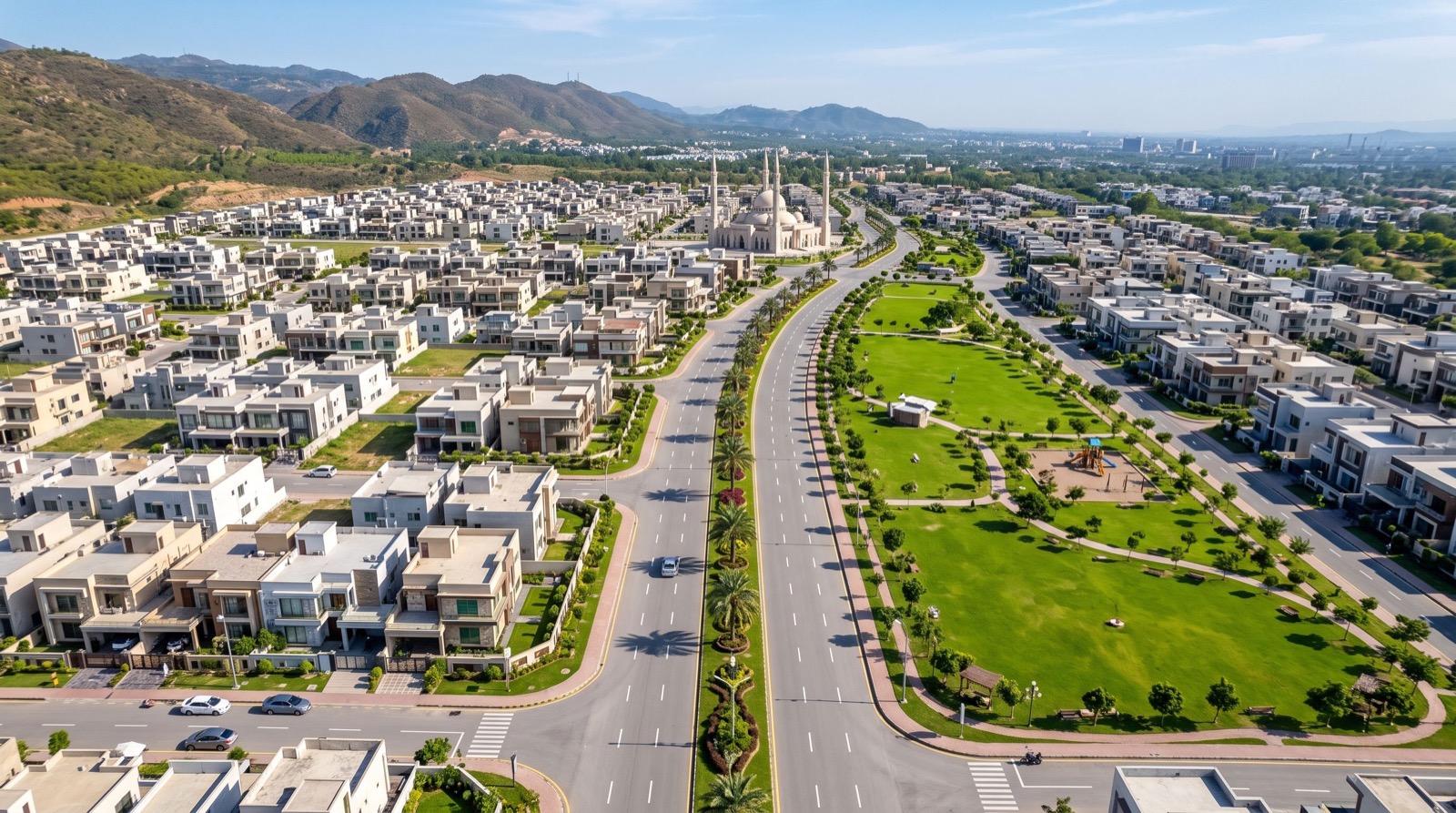
Rawalpindi and Islamabad have both seen steady demand growth as commuter infrastructure improves and more families relocate from congested inner-city neighborhoods toward planned housing schemes on the outskirts. New interchanges, widened arterial roads, and extended utility networks have opened up land that was considered too far out just five years ago.
That growth has pulled in two different buyer profiles: families looking for an affordable, well-planned place to eventually build a home, and investors chasing rental yield or resale appreciation from commercial frontage. Both groups are active in the same societies, often buying blocks apart from each other.
Residential Plots vs Commercial Plots: Core Differences
Before comparing returns, it helps to lay out what actually separates the two categories on paper and on the ground.
| Factor | Residential Plots | Commercial Plots |
|---|---|---|
| Primary buyer | Families, long-term homeowners | Investors, small business owners |
| Typical holding period | 5-15 years, often permanent | 2-7 years, more liquid resale |
| Return driver | Neighborhood development, overall society growth | Footfall, frontage visibility, nearby commercial density |
| Entry cost per marla | Generally lower | Generally higher on main boulevards |
| Risk profile | Lower, steadier appreciation | Higher, tied to how fast the society fills up |
Neither column is universally “better.” A residential plot bought early in a new society can outperform a commercial plot bought late, once nearby blocks sell out and prices firm up across the board.
Why residential plots suit first-time buyers
Residential sections are typically zoned away from heavy traffic and commercial noise, which makes them easier to evaluate: you are mainly judging the society’s development pace, utility rollout, and neighborhood quality rather than forecasting retail demand years out.
Why commercial plots attract investors
Commercial plots along main boulevards benefit from compounding returns once a few shops open and foot traffic builds, but that same dependency means a commercial plot in a slow-filling society can sit idle for years without any rental income to offset the holding cost.
Which Plot Type Actually Delivers Better Returns in Rawalpindi?
There is no single answer, but a useful rule of thumb exists: buy residential if you want predictability and plan to build or hold long-term, and buy commercial only if you have already confirmed strong development progress nearby, since commercial value is almost entirely borrowed from the activity around it.
Data from the State Bank of Pakistan on housing finance trends shows mortgage-backed residential demand has stayed comparatively resilient even during periods of tighter credit, which tends to support steadier residential plot pricing compared with commercial segments that react more sharply to broader business sentiment.
What to Look for in a New Housing Society Before You Buy
If you are comparing a brand-new society against an established one, treat the comparison carefully. A New housing society Rawalpindi buyers haven’t fully populated yet can still be a smart early entry, but only if the master plan, utility rollout, and approval status are transparent from day one.
Look specifically for a published Silver city master plan style document that shows block-by-block zoning, road widths, park and school reservations, and a realistic phased timeline. A society that cannot produce a clear master plan on request is asking you to buy blind, no matter how attractive the launch pricing looks.
- Confirm the master plan matches what sales staff describe verbally.
- Ask when utility work starts in your specific block, not just “phase 1.”
- Check whether park, school, and mosque land has actually been reserved on paper.
- Compare the per-marla price against nearby established societies for a sanity check.
Getting Expert Help Before You Sign
Most buyers only go through this process once or twice in a lifetime, which means they are negotiating against people who do it every day. Bringing in reputable service experts to review paperwork, confirm valuations, and cross-check the development timeline levels that imbalance before you commit a down payment.
A second opinion from someone outside the sales office is especially valuable when a deal feels unusually time-pressured, since genuine development approvals and land titles do not expire overnight, no matter what a “limited time offer” banner implies.
Frequently Asked Questions
Is it better to buy a plot early in a new housing society or wait until development is complete?
Buying early usually means lower prices but more waiting and more diligence on approvals, while buying later costs more but reduces uncertainty about whether the society will actually deliver utilities and roads on schedule.
How much more does a commercial plot typically cost than a residential plot of the same size?
Pricing varies by society and location within it, but commercial plots on main boulevards commonly carry a meaningful premium over interior residential plots of the same area because frontage and footfall value is priced in separately from the land itself.
Can I convert a residential plot to commercial use later?
Generally no, not without a formal change-of-land-use approval from the relevant development authority, which is a lengthy process and far from guaranteed. It is far simpler to buy the correct category upfront based on your actual intended use.
What is the biggest mistake buyers make when choosing between residential and commercial plots?
Buying commercial purely because it “sounds like a better investment” without checking whether the surrounding blocks have enough activity yet to support a shop or office. Commercial value without footfall is just an expensive residential plot with extra restrictions.
Choosing between a residential vs commercial plot in 2026 comes down to matching the asset to your actual plan, not chasing whichever category sounds more profitable in a sales pitch. Verify the master plan, check the development pace with your own eyes, and bring in a second opinion before you sign anything.